When changing a model or prompt, judge improvement by a stable question set, not by the feeling of a better demo. Before adoption, document golden set and grader rule so review, cost control, and accountability are not pushed downstream.
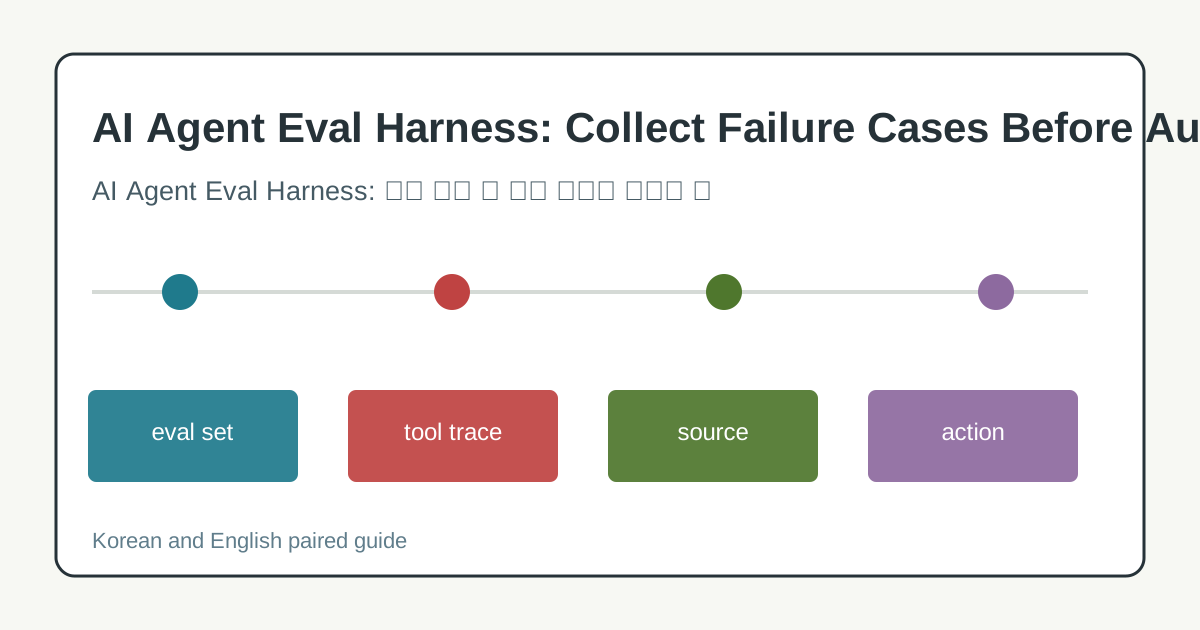
AI evaluation should be a regression test with benchmark data, graders, failure types, and release gates, not a few demo prompts.
This article is educational and does not recommend a specific model or vendor. For AI Evals Scorecard: Manage Quality with Regression Tests, it focuses on the golden set rule, review ownership, and operating records before adoption.

Why This Matters Now
When changing a model or prompt, judge improvement by a stable question set, not by the feeling of a better demo.
For this topic, start with golden set and grader rule. If either is vague, the workflow can look fast while review, cost control, and accountability move downstream.
Signals To Check First
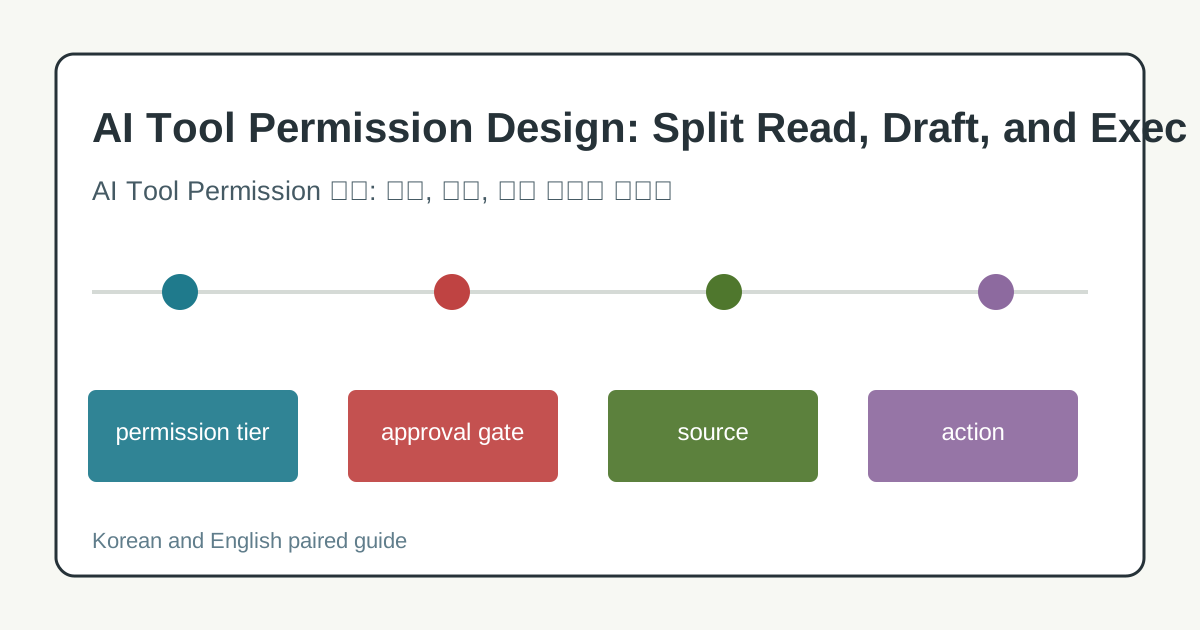
- golden set: Define the tools, data, and execution rights the agent can actually use. Separate read, draft, and external execution permissions, and write down prohibited actions explicitly.
- grader rule: Define where a human must approve the workflow. Costly actions, user-impacting output, external transfer, and file deletion should remain blocked until this gate passes.
- failure class: Keep enough evidence for later review. Store the input, tool call, decision reason, and failure class together so the next run can be compared against the same standard.
- release gate: Define the recovery path before the workflow runs. Name the previous version, owner, stop condition, and user-notice rule so a failed automation can be reversed quickly.

Practical Adoption Order
- Build a sample of real user questions.
- Define expected answers and prohibited errors.
- Set a release-blocking score.
The common failure is expanding automation before golden set is clear. Start with ‘Build a sample of real user questions’, then widen scope only after review results are stable.
Field Pilot Example
A practical pilot can stay small: choose one team, one document type, and one workflow, then write the golden set rule as a table. Apply ‘Build a sample of real user questions’ to ten real cases and mark each result as accepted, held for review, or rejected. Keep the grader rule rule visible to the reviewer instead of leaving it as tribal memory. This makes the test about controllable quality, not about whether the output looks impressive in a demo.
Operating Notes
In operation, golden set is not a one-time setup. When the model, prompt, data, or tool permission changes, recheck grader rule as well. For outputs that affect users, the evidence document, log location, and correction path should be easy to find from the same operating record.
Team Checklist
- Keep the adoption goal and prohibited uses next to the golden set rule.
- After ‘Build a sample of real user questions’, rerun the same review whenever the model, prompt, data, or grader rule rule changes.
- For user-impacting outputs, keep logs, evidence, and a path for correction or appeal.
FAQ
When should this topic be applied first?
Start with work that is frequent and has a low cost of failure. Even for AI Evals Scorecard: Manage Quality with Regression Tests, avoid full automation at the beginning. Define the ‘Build a sample of real user questions’ step, name the reviewer, and test outcomes and errors on a small sample.
How do we know whether the golden set rule is safe enough?
The golden set rule should be written down, and another reviewer should be able to check the grader rule rule in the same way. If every reviewer interprets the rule differently, the issue is usually operating design rather than model capability.
What should be logged when the workflow fails?
Keep the input evidence, model or tool setting, golden set reviewer decision, and correction result together. This lets the team see whether later changes reduce the same error and gives a way to explain or reverse user-impacting output.
Professional Depth Check
For AI Evals Scorecard: Manage Quality with Regression Tests, the practical standard is not whether the reader can repeat one instruction once. Treat the topic as an AI governance and workflow decision: verify task boundary, evaluation data, human review trigger, and cost and latency budget before drawing a conclusion. The result should be written as a small decision record, because future readers need to know which fact was observed, which assumption was used, and which condition would change the answer.
Evidence That Makes the Guidance Reliable
Use objective evidence before changing a workflow. Good evidence includes eval results, sample prompts, tool traces, and failure examples. If two pieces of evidence conflict, keep the conflict visible instead of smoothing it over. For example, a successful quick fix is still weak evidence if the same input, account, dependency, or device state has not been tested again. A durable article should help the reader distinguish a confirmed fix from a plausible fix.
Leave a comment