SMS codes can be exposed through SIM swap fraud, malware, or phishing pages. Start with: upgrade email and financial accounts first. Then preserve evidence, verify through a separate route, and recover accounts in order.
Turning on MFA matters, but method choice matters too. Critical accounts should move from SMS toward authenticator apps, passkeys, or security keys.
Use this as a response routine for SIM swap: act through official routes, keep records, and involve the right owner when money, work, or family accounts are exposed.
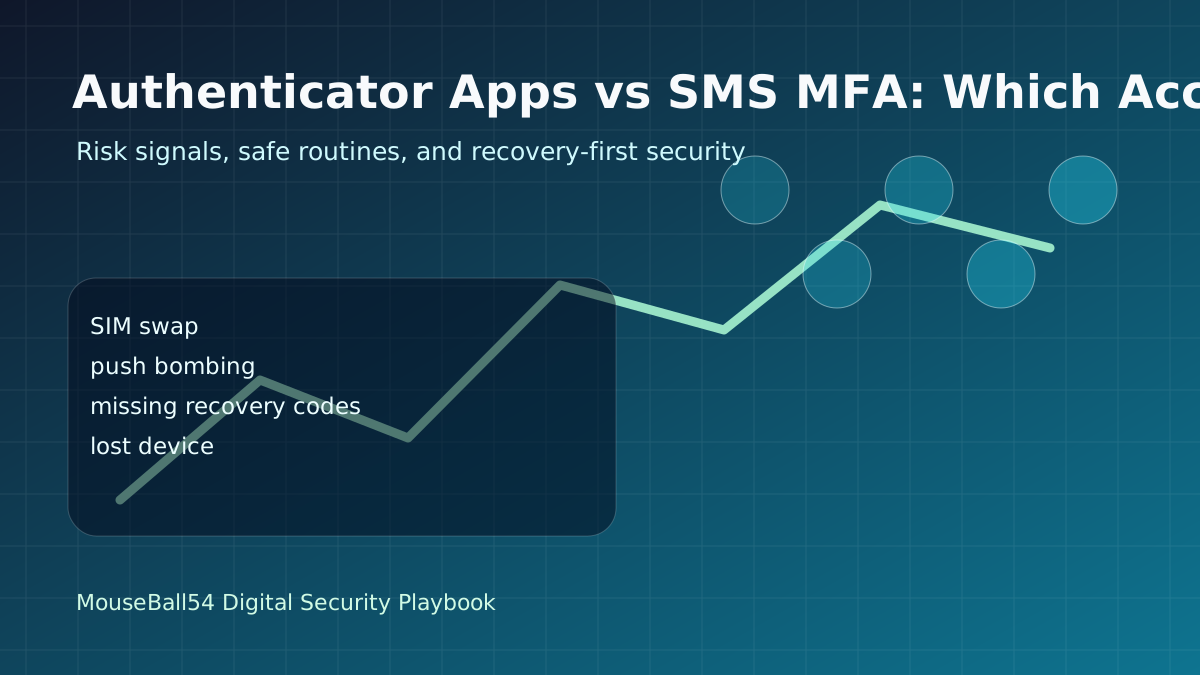
What Can Go Wrong
SMS codes can be exposed through SIM swap fraud, malware, or phishing pages.
This attack pattern works by pulling users away from normal routes. When SIM swap appears, do not solve the problem inside the message thread. Instead, save recovery codes and register a backup factor so evidence and recovery options stay under your control.
For SIM swap, push bombing, the baseline is pause, verify separately, preserve records, and keep recovery possible. Even without deep technical knowledge, those steps slow account takeover and financial loss.
Warning Signals To Check First
- SIM swap: Do not fix the issue inside the message or app that triggered it. Recheck through a saved bookmark, official app, or another trusted route.
- push bombing: Preserve screenshots, sender details, payment requests, and login history first. Evidence makes blocking, reporting, and recovery more reliable.
- missing recovery codes: Define the recovery order: password change, MFA reset, connected-device review, and payment alert checks. Handle important accounts one at a time.
- lost device: If family, work, customer data, or payment authority is involved, tell the responsible person quickly. Fast reporting limits the damage.
Practical Setup Order
- Upgrade email and financial accounts first.
- Save recovery codes and register a backup factor.
- Check request location and time before approving push prompts.
If family members or teammates are involved, share one verification phrase and one pause rule. A simple rule such as ‘Upgrade email and financial accounts first’ is easier to follow under pressure than improvising.
If You Already Made a Mistake
If you already acted on SIM swap, organize the timeline instead of hiding the mistake. Change passwords, review payment methods, capture login history, and check connected devices before evidence disappears.
If work accounts, customer data, or payment authority are connected to SIM swap, tell the responsible person quickly. Fast reporting is a security control, not an admission of failure.
Monthly Checkup
- Upgrade email and financial accounts first.
- Save recovery codes and register a backup factor.
- Check request location and time before approving push prompts.
- Review login history and connected devices together.
- Record the date and reason when you change a security setting.
Professional Depth Check
For Authenticator Apps vs SMS MFA: Which Accounts to Upgrade First, the practical standard is not whether the reader can repeat one instruction once. Treat the topic as a security prevention and recovery routine: verify account access, device state, recovery channel, and evidence preservation before drawing a conclusion. The result should be written as a small decision record, because future readers need to know which fact was observed, which assumption was used, and which condition would change the answer.
Evidence That Makes the Guidance Reliable
Use objective evidence before changing a workflow. Good evidence includes login history, alert emails, transaction records, and device and browser versions. If two pieces of evidence conflict, keep the conflict visible instead of smoothing it over. For example, a successful quick fix is still weak evidence if the same input, account, dependency, or device state has not been tested again. A durable article should help the reader distinguish a confirmed fix from a plausible fix.
Review Table
| Review Item | What To Confirm | Why It Matters |
|---|---|---|
| Scope | The exact case covered by this article | Prevents over-applying the advice |
| Baseline | The state before any change | Makes rollback and comparison possible |
| Change | The smallest action taken | Reduces hidden side effects |
| Result | The observed output after the change | Separates evidence from expectation |
| Recheck | When to revisit the conclusion | Keeps the post accurate over time |
Edge Cases and Failure Modes
The main risks are resetting evidence before screenshots are captured, and reusing compromised recovery channels. When the situation involves production data, personal information, money, health, legal rights, or security recovery, the conservative path is to stop and collect evidence before applying a broad fix. The same title can describe very different cases, so the reader should compare their environment with the assumptions in the post before copying commands or decisions.
Maintenance Standard
Recheck this guidance after suspicious messages, account alerts, device changes, or breach notices. A useful update does not need to rewrite the entire post; it should confirm whether the examples, links, commands, screenshots, and decision criteria still match current behavior. If the old conclusion remains valid, record the check date. If it changes, explain what changed and why the previous advice is no longer enough.
Source Notes
- FTC Two-Factor Authentication Guide
- NIST SP 800-63B Authentication and Authenticator Management
- CISA Secure Our World
Leave a comment