Personal finance is less about guessing returns and more about managing how time horizon affects cash flow, debt cost, risk buffers, and time horizon.
An investment’s fit depends on time horizon and loss tolerance. Short-term money and long-term money should not carry the same risk.
This article is educational and does not give individualized investment, tax, lending, or legal advice for Risk Tolerance and Time Horizon: The Same ETF Looks Different by Goal. Use it to organize questions, then verify local rules, fees, contracts, and personal risk capacity before acting.
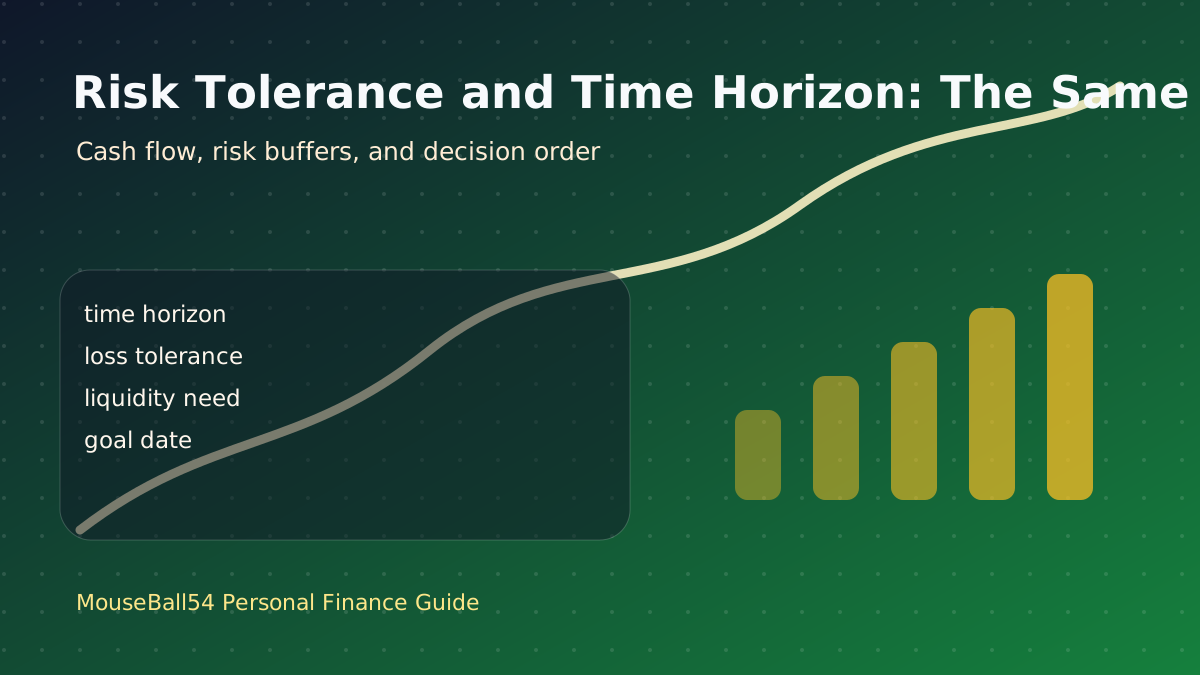
Why It Matters
A down-payment fund cannot tolerate much volatility, while retirement money can face risk from returns that are too low.
The first question is where time horizon belongs: monthly budget, emergency cash, debt, or a long-term goal. Start with ‘Write the spending date for each goal’, then write the cost of being wrong and the time needed to recover.
Numbers To Check First
- time horizon: when this changes, check whether the impact hits budget, debt, savings, or long-term goals.
- loss tolerance: when this changes, check whether the impact hits budget, debt, savings, or long-term goals.
- liquidity need: when this changes, check whether the impact hits budget, debt, savings, or long-term goals.
- goal date: when this changes, check whether the impact hits budget, debt, savings, or long-term goals.
Read time horizon together with loss tolerance. One rate or return can look simple, but term length, fees, taxes, and cash-flow buffer can turn the same number into a very different burden.
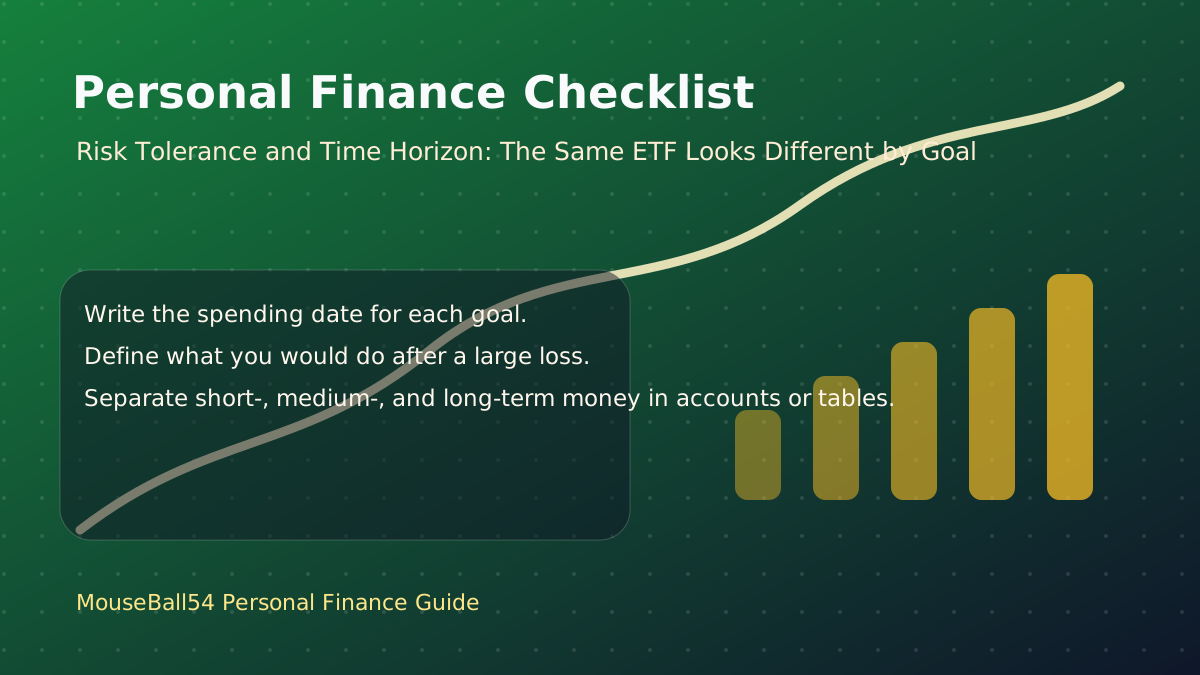
Practical Order
- Write the spending date for each goal.
- Define what you would do after a large loss.
- Separate short-, medium-, and long-term money in accounts or tables.
Do not try to fix every part of the system in one month. Start with one visible change such as ‘Write the spending date for each goal’, then use next month’s data to decide the next adjustment.
Common Mistakes
The common mistake is focusing on time horizon while missing total cost. Define what you would do after a large loss. Then compare monthly payment, total cost, fees, taxes, liquidity, and behavioral sustainability in one table.
When time horizon touches both debt and investing decisions, separate short-term money from long-term money. High-rate debt, emergency cash, and long-term investments need different rules even when they appear on the same dashboard.
Monthly Checkup
- Write the spending date for each goal.
- Define what you would do after a large loss.
- Separate short-, medium-, and long-term money in accounts or tables.
- Check fees, taxes, contract terms, and liquidity limits together.
- Verify local financial and tax rules before applying the idea to your situation.
Professional Depth Check
For Risk Tolerance and Time Horizon: The Same ETF Looks Different by Goal, the practical standard is not whether the reader can repeat one instruction once. Treat the topic as a personal finance planning check, not individualized advice: verify cash flow, interest and fees, tax or contract rule, and risk capacity before drawing a conclusion. The result should be written as a small decision record, because future readers need to know which fact was observed, which assumption was used, and which condition would change the answer.
Evidence That Makes the Guidance Reliable
Use objective evidence before changing a workflow. Good evidence includes statements, APR or expense ratio, payment schedule, and emergency reserve. If two pieces of evidence conflict, keep the conflict visible instead of smoothing it over. For example, a successful quick fix is still weak evidence if the same input, account, dependency, or device state has not been tested again. A durable article should help the reader distinguish a confirmed fix from a plausible fix.
Review Table
| Review Item | What To Confirm | Why It Matters |
|---|---|---|
| Scope | The exact case covered by this article | Prevents over-applying the advice |
| Baseline | The state before any change | Makes rollback and comparison possible |
| Change | The smallest action taken | Reduces hidden side effects |
| Result | The observed output after the change | Separates evidence from expectation |
| Recheck | When to revisit the conclusion | Keeps the post accurate over time |
Edge Cases and Failure Modes
The main risks are optimizing for headline return while ignoring liquidity, and comparing products before checking constraints. When the situation involves production data, personal information, money, health, legal rights, or security recovery, the conservative path is to stop and collect evidence before applying a broad fix. The same title can describe very different cases, so the reader should compare their environment with the assumptions in the post before copying commands or decisions.
Maintenance Standard
Recheck this guidance after income, debt, tax, family, or market-condition changes. A useful update does not need to rewrite the entire post; it should confirm whether the examples, links, commands, screenshots, and decision criteria still match current behavior. If the old conclusion remains valid, record the check date. If it changes, explain what changed and why the previous advice is no longer enough.
Leave a comment